
 Tiếng Việt
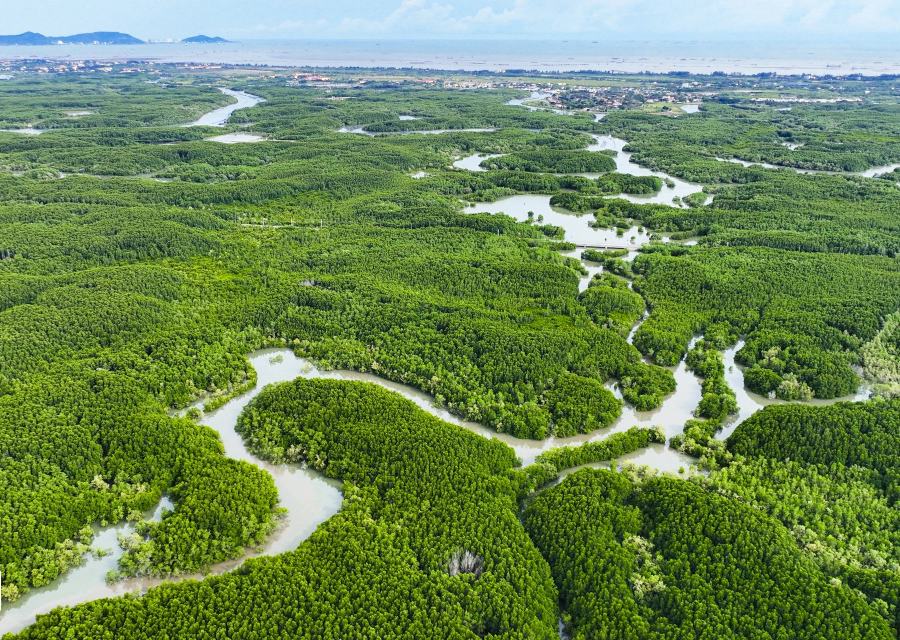
Vietnam currently has about 200,000 hectares of mangrove forests, offering significant blue carbon potential. Initial calculations show that blue carbon will contribute around 3 million tons of CO₂ to Vietnam’s upcoming Nationally Determined Contribution (NDC) by 2035…
The information was shared by the Department of Climate Change at a side event of COP30 titled “Harmonizing Policies and Financing for Blue Carbon Solutions.”
Blue carbon ecosystems—including mangroves, seagrass beds, and coastal marshes—play a crucial role in reducing greenhouse gas emissions, conserving biodiversity, and strengthening the resilience of coastal communities against climate impacts.
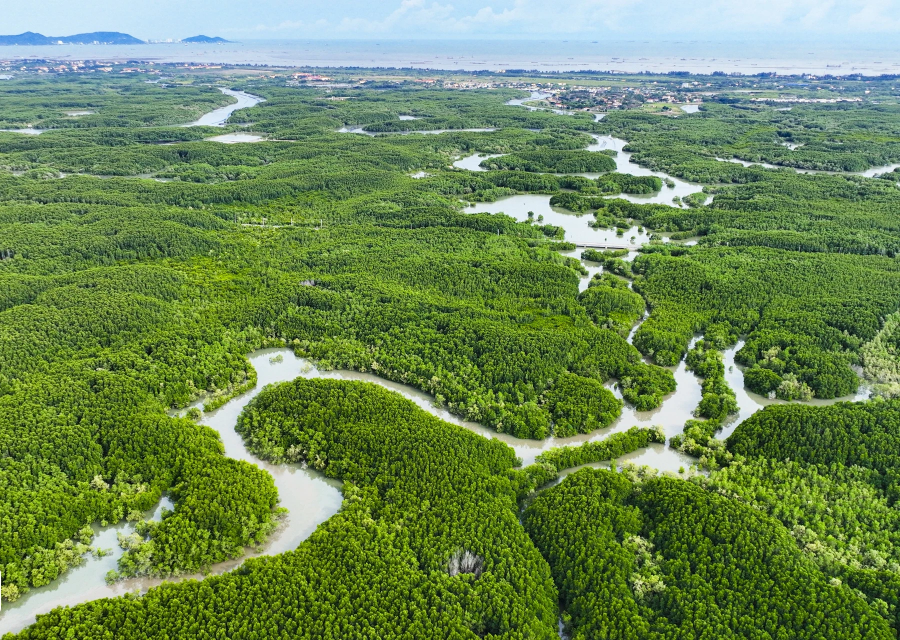
With a coastline stretching more than 3,200 km from north to south, Vietnam currently has about 200,000 hectares of mangrove forests, offering significant blue carbon potential. In addition to carbon storage capacity, coastal ecosystems also harbor high biodiversity and provide vital protection against storms, reducing property damage and preventing coastal erosion.
Le Ngoc Tuan, Deputy Director General of the Department of Climate Change, said Vietnam has worked with international organizations to assess the potential of its blue carbon systems. However, cooperation so far has only produced preliminary estimates for mangroves, while further studies and inventories on salt marshes and seagrass beds still need to be conducted.
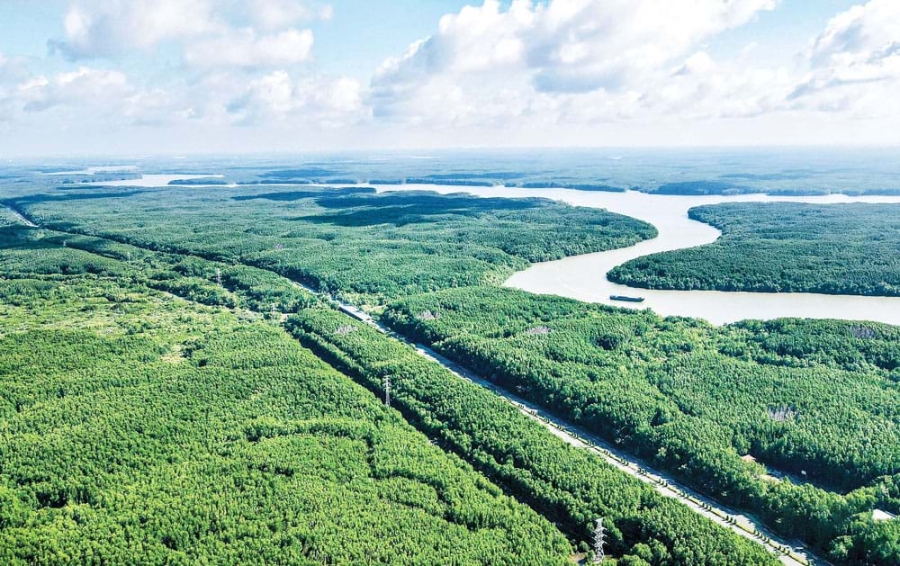
According to initial estimates, blue carbon will contribute about 3 million tons of CO₂ to Vietnam’s emission reduction target under its upcoming NDC by 2035. As a result, blue carbon projects are attracting increasing attention from communities and the private sector.
Despite their potential, blue carbon systems in Vietnam face many challenges due to growing economic development activities and the impacts of climate change, especially climate-related disasters such as storms.
In response, the Vietnamese Government has prioritized the protection and restoration of blue carbon systems through national regulations, policies, and financial incentives for local communities and the private sector to invest in expanding blue carbon areas.
This priority is reflected in national policies and financial mechanisms designed to encourage local and private-sector investment in restoring and expanding blue carbon ecosystems.
As part of these efforts, Vietnam has partnered with the World Economic Forum to establish the National Blue Carbon Action Partnership (NBCAP Vietnam). This multilateral platform will coordinate national initiatives and connect with the Global Blue Carbon Action Partnership.
NBCAP Vietnam will create a coordinated platform for further developing blue carbon systems, contributing to climate mitigation and adaptation, biodiversity conservation, and improving local livelihoods. Based on this platform, Vietnam will develop a national blue carbon database, a roadmap for emission reduction from blue carbon, and a financial roadmap involving policymakers, investors, and other stakeholders.
Through NBCAP Vietnam, pilot projects will be developed and implemented, mobilizing greater financial resources for blue carbon, enhancing blue carbon capacity, and aligning local blue carbon actions with global initiatives.
Source: Việt Nam xây dựng cơ sở dữ liệu carbon xanh quốc gia, hướng tới 3 triệu tấn CO2 – VnEconomy
